





What it is
A Trump Account is a federally created, tax-deferred investment account for children under 18, established by the One Big Beautiful Bill Act. The IRS classifies it as a type of IRA, with accounts launching in early July.
Contributions
- The federal government seeds accounts with $1,000 for qualifying children born between 2025–2028 if you make the election to do so. While anyone who is under 18 can open an account, only children born between 2025-2028 will receive the $1,000 deposit.
- Annual contributions are capped at $5,000 across all sources.
- There is no earned income requirement so contributions can be made regardless of any wage income the child may have earned.
- Employers are eligible to contribute up to $2,500 which is excluded from taxable income. However, these contributions count toward the annual limit.
- Personal contributions are not tax deductible.
Investment options
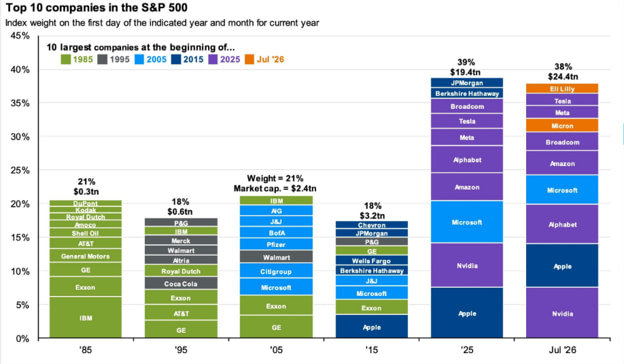
As of the current guidance, the accounts are to be invested low-cost (no expense ratio over 0.10%) mutual funds or ETFs tracking a broad index of primarily U.S. equities that avoid leverage. This means that during the growth period, there will be no bond exposure and a large allocation to domestic stocks.
Tax treatment
Like any IRA, growth is tax-deferred. Investment income accumulates tax-deferred until withdrawn and upon distribution, earnings are generally taxed under Traditional IRA rules. This means earnings will be taxed as ordinary income, but any after-tax basis built up through contributions may be recovered tax-free.
Withdrawals and penalties
Funds cannot be withdrawn before January 1 of the year the child turns 18 (the “growth period”). At that point, Traditional IRA rules apply to withdrawals, including possible 10% early-withdrawal penalties for distributions prior to age 59 1/2. Exceptions to the early withdrawal penalty include qualified education expenses, first-time home purchase, medical expenses, and disability.
How it compares to 529 college savings
Trump Accounts are not a specific education savings vehicle like a 529 plan, which is an important distinction. While distributions can be used towards education, they don’t offer 100% tax-free withdrawals for qualified education expenses the way a 529 does. In addition, FAFSA treatment has not yet been clearly addressed in the official guidance, so families should wait for Department of Education guidance before determining if assets in a Trump Account could impact aid.
How it compares to custodial IRAs vs. UTMA custodial accounts
Trump Account
- No earned income requirement, so contributions can begin at birth.
- Offers earlier access to compounding than a custodial IRA.
- More restrictive than a UTMA in terms of access and use of funds.
- No annual taxation on dividends and interest, unlike a UTMA
Custodial IRA (Roth or Traditional)
- Requires earned income, which limits contributions during childhood
- Can offer strong tax benefits, but only once the child has eligible compensation
- Less accessible than the Trump Account in the early years
UTMA
- No contribution limits
- Funds can generally be used without the same restrictions tied to retirement-style accounts
- Assets become the child’s property at the age of majority
- Taxable along the way, which can reduce long-term compounding
Why the tax difference matters
In a taxable UTMA, dividends can create annual tax liability even if nothing is sold. In a more tax-advantaged account like a custodial IRA or a Trump Account, those dollars can remain invested and continue compounding which can become meaningful in dollar terms over the long term.
Final Thoughts
Trump Accounts introduce a new way to build long-term, tax-deferred savings for children. While they don’t offer all the tax benefits received from a 529, they offer greater contribution flexibility than other tax-deferred savings vehicles like custodial IRAs. Trump Accounts are a great complement to a 529 or UTMA strategy – they just serve a different purpose. Think of the 529 as the education bucket, the UTMA as the flexible/accessible bucket, and the Trump Account as the long-runway wealth-building bucket.
Final regulations are expected to be released July 2026 which will provide more clarity. As with any new legislation, details may continue to develop, so it’s worth revisiting this strategy as additional rules and interpretations are released.